Cream Cheese Buttercream Frosting
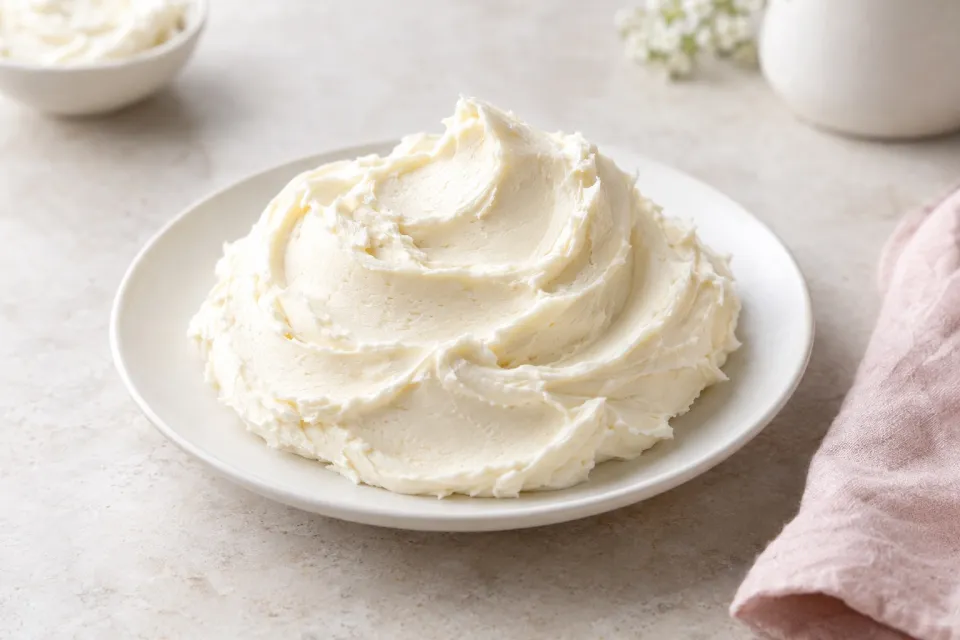
A creamy cream cheese buttercream with real vanilla custard and lemon, made for spreading, piping, and holding its shape on cakes.
Prep 30 min · Cook 15 min · Total 2 hr 15 min · Makes about 7 cups
Ingredients
- 12 ounces milk, any percentage will do
- 1 vanilla bean, split lengthwise
- 8 ounces sugar
- 1 1/2 ounces cornstarch
- 3 large eggs, straight from the fridge
- 1/2 ounce vanilla extract
- 16 ounces full-fat Philadelphia cream cheese, softened to about 65°F/18°C
- 12 ounces unsalted butter, softened to about 65°F/18°C
- 1 ounce freshly squeezed lemon juice
Directions
- For the custard, pour the milk into a 3-quart stainless steel saucier and add the vanilla bean. Warm over medium heat until the milk reaches a gentle simmer. As soon as you see bubbling, turn off the burner, cover the pan, and let it infuse for 30 minutes. You can also cover it and chill it until you need it, up to 24 hours, for a stronger vanilla flavor. While the milk steeps, whisk the sugar with the cornstarch in a medium bowl, then whisk in the eggs.
- Bring the milk back to a simmer. Remove the vanilla bean, scraping the seeds from inside and adding them back to the milk. Slowly add 1/2 cup of the hot milk to the egg mixture, whisking as you go. Do the same with a second and third ladleful, then scrape the warmed egg mixture into the pot. Set the pan over medium heat and whisk without stopping until the custard becomes thick and uneven, about 3 minutes. Once it starts to bubble slowly, keep cooking and whisking for 2 full minutes, until the custard smooths out and the yolks’ starch-thinning protein has been neutralized.
- Take the pan off the heat and mix in the vanilla extract. Transfer the custard to a large baking dish so it can cool more quickly. Lay plastic wrap directly on the surface and refrigerate until it is thick and cool, about 1 hour, or close to 68 degrees F (20 degrees C). If needed, you can chill it up to 1 week, then leave it at room temperature until it comes back to about 68 degrees F.
- For the buttercream, place the softened cream cheese and butter in the bowl of a stand mixer fitted with the paddle attachment. Beat on medium speed until the mixture looks pale and airy, about 5 minutes. While that runs, stir the chilled pudding in the baking dish until it forms a thick, doughy mass. Scrape down the bowl and paddle with a flexible spatula, then change to the whisk attachment and whip on medium speed. Add the pudding a few tablespoons at a time, then stream in the lemon juice; if you want, adjust with a pinch of salt. Scrape the bowl again and whip for a few seconds more so everything is smooth. The finished buttercream should be creamy and light, but still firm enough to cling to a spoon turned upside down.
- Use the buttercream right away, or spoon it into a large zipper-lock bag, push out the air, and seal it well. It can be refrigerated for up to 2 weeks or frozen for up to several months. The main concern with a longer stay in the freezer is picking up odors, rather than spoilage. Before using, let it warm to about 72 degrees F (22 degrees C), then whip it again.
- If the buttercream looks too firm or heavy, and tastes greasy instead of melting smoothly, move a cup of it to a small bowl and microwave until fully melted, about 30 seconds. Add the melted portion back to the mixing bowl and whip for 15 seconds on medium-high. If it is too soft or gooey instead, chill the whole bowl for 15 minutes, then whip for 3 minutes on medium-high. Even though this buttercream is made differently, you can troubleshoot it the same way you would fix Swiss meringue buttercream.