How to Make Homemade Pasta
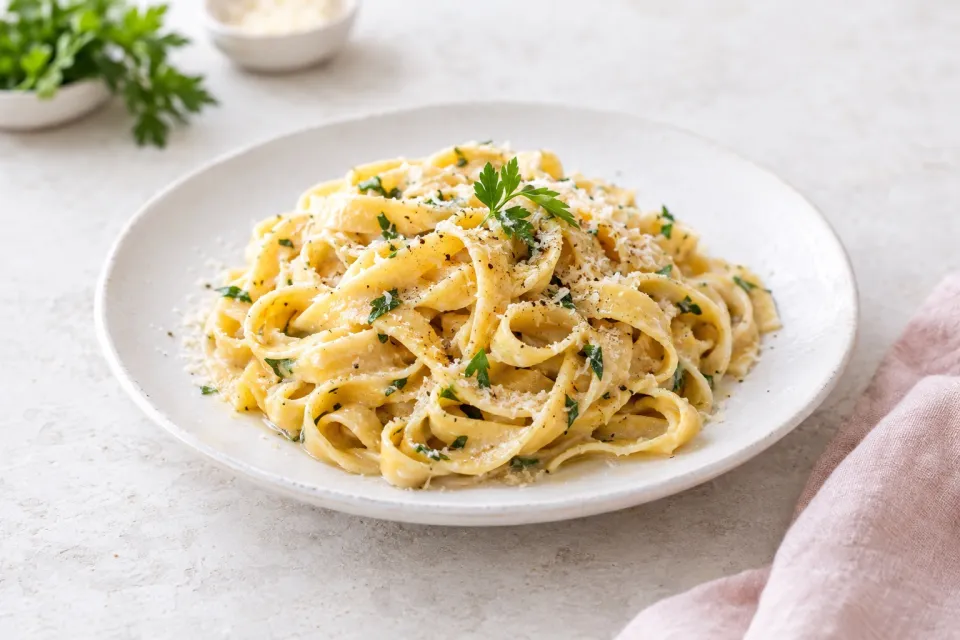
Fresh egg pasta rolled by hand into tender noodles, ready for sauce now or a stash of freezer-friendly nests later.
Prep 55 min · Cook 15 min · Total 2 hr 25 min · Makes 6 servings
Ingredients
- 2 3/4 cups all-purpose flour + more for dusting and rolling
- 4 large eggs
- 1 egg yolk
- 3 teaspoons olive oil
- 1/2 teaspoon salt
Directions
- Pile the flour on your countertop, then make a roomy hollow in the middle, deep and wide enough to contain the eggs and olive oil. Add the eggs and yolk, then the olive oil and salt. Use a fork to beat the eggs and oil together.
- Keep whisking with the fork while gradually dragging small amounts of flour from the inner wall into the liquid. Move slowly and stir gently so the flour rim holds everything in place. If some egg escapes, just shore up that spot with extra flour using your hand or a bench scraper, then keep going.
- Work this way until the eggs are mixed in and the dough begins forming. Some areas will be moist and clumpy, others loose, with plenty of dry flour still visible. Bring it together with your hands or a bench scraper, scooping the damp crumbles into the flour and cutting them through until the mass starts to unite.
- Once the dough is mostly holding together but still rough around the edges, shape it into a ball. Press and fold it on the counter for 10 minutes. It will start out shaggy, then grow firmer and smoother as you work.
- If it starts clinging to your fingers, sprinkle the counter with a little more flour. By the end, the dough should feel soft, elastic and smooth, without stickiness. Cover it tightly in plastic wrap and leave it on the counter for 1 hour. When that rest is over, move on to rolling, chill it for tomorrow, keeping the total under 24 hours, or put it in the freezer.
- For freezing the unrolled dough, wrap the ball snugly in plastic wrap, slide it into a zip-top bag, and press out the air before sealing it. Oil is not needed.
- After the dough has rested, make it into a thick log and divide it into 5 or 6 equal pieces. Set 1 piece on the counter and wrap the remaining pieces again. If your workspace is tight, split each piece in half so there is less dough to manage.
- Generously flour the counter, then use a rolling pin to stretch the dough into a long sheet. After each roll, pick up the dough, flour the counter again underneath it, and turn it over. You are aiming for a long, very thin sheet, nearly paper-thin, yet sturdy enough to lift from the counter.
- Sprinkle flour over the sheet. Beginning at a short end, fold it back and forth in loose accordion pleats; this keeps the layers from gluing together better than coiling the dough into a tight roll.
- With a very sharp knife, slice across the folded stack to make noodles. Make them as narrow or broad as you like, from thin linguini-style strands to wider fettuccine-style ribbons, but keep the width even so they finish cooking at the same pace.
- Open up the noodles and drape them on the back of a chair, over a kitchen island, or across the dining room table. Leave them to dry for about 15 minutes.
- Work through the remaining pasta the same way.
- At this stage, the noodles should be dry to the touch but still bendable. Cook them right away, or freeze them for another day.
- For freezing, gather the noodles into several small, loose nests. Avoid packing them down; a light grouping is enough. Arrange the nests on a heavily floured baking sheet and freeze them. After they are frozen solid, move them to a large resealable bag. Use the frozen noodles as you need them; they will keep for 9 months.
- To cook, bring a pot of heavily salted water to a boil. Drop in the fresh or frozen pasta and boil for 4 to 5 minutes, until the noodles are pleasantly chewy and al dente. Taste 1 noodle to make sure, then add your favorite sauce.