Lemon-Ricotta Cheesecake
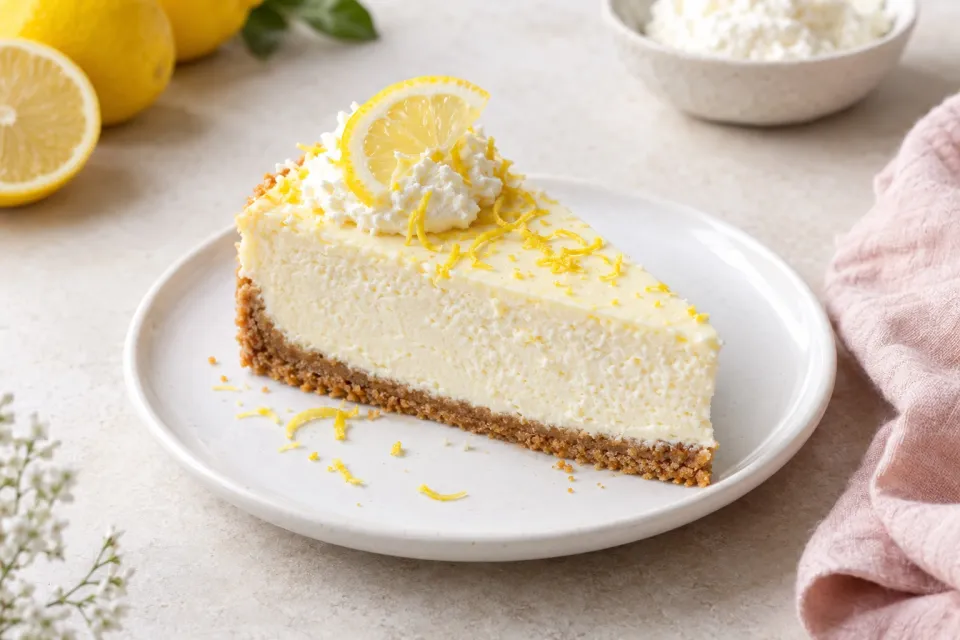
A slow-baked lemon ricotta cheesecake with a crumb crust, silky texture, and bright citrus finish for a polished make-ahead dessert.
Prep 30 min · Cook 3 hr 30 min · Total 18 hr 30 min · Makes 1 8-inch cheesecake (16 slices)
Ingredients
- For the graham cracker crust:
- 9 ounces fine cookie crumbs, store-bought or homemade, such as gingerbread, gingersnaps, or graham crackers, see note
- 1 ounce unsalted butter, melted
- Pinch of salt
- For the cheesecake:
- 24 ounces full-fat cream cheese, such as Philadelphia, brought to about 70°F/21°C
- 24 ounces fresh ricotta, strained if watery, brought to about 70°F/21°C, see note
- 10 ounces plain or toasted sugar
- 1 ounce freshly squeezed lemon juice
- 1 tablespoon freshly grated lemon zest, not packed
- 1/2 teaspoon lemon oil or lemon extract
- 1/2 teaspoon orange flower water
- 1/4 teaspoon Diamond Crystal kosher salt; for table salt, use about half as much by volume or the same weight
- 8 large eggs
- To Serve:
- Candied lemon peel, blueberry jam, or other accompaniments, such as 1 recipe complementary Fruit Syrup or jelly, for saucing the fruit, optional
Directions
- Start with an 8- by 4-inch nonreactive aluminum pan, ideally a non-latching 2-piece version. A standard cake pan in the same size will also do the job, though unmolding takes a little more patience. You can use another pan size or style for cheesecake, but the amount of batter, final temperatures, and baking time would need their own adjustments, which are not included here. For a 2-piece pan, cover the removable bottom with foil before putting the pan together, then trim off the extra so it rests level. For a standard cake pan, fit a parchment round into the bottom. Whichever pan you use, grease it lightly.
- For the crust, put the cookie crumbs, melted butter, and salt right into the pan, then mix them with a fork until evenly moistened. Taste and add a bit more salt if it needs it. Press the crumbs into a flat, even base with your fingertips. It may look a little dry now, but the filling will lend it moisture in the oven.
- For the cheesecake, set an oven rack in the middle position and heat the oven to 225 degrees F. In the bowl of a 14-cup food processor, combine the cream cheese, ricotta, sugar, lemon juice, lemon zest, lemon oil, orange flower water, and salt, then process until the mixture is smooth. Stop and scrape down the bowl as needed so any stubborn bits of cream cheese get worked in. When the mixture is smooth, add the eggs and process just until everything is combined. Use the batter right away, or chill it in an airtight container until you need it, for up to 1 week. This much batter is too much for mini-choppers and for food processors with a thick-liquid fill mark under 10 cups; without that equipment, mix by hand or use a stand mixer very carefully so you do not beat in too much air.
- Pour the batter into the prepared pan and set the pan on a baking sheet. Hop a spoon gently over the surface to coax out air bubbles. If none appear, you are done; if you see some coming up, keep tapping with the spoon until they disappear.
- Bake until the outer area feels set, while the center still has a gentle jiggle when you move the pan. That softer center should not be wider than 3 inches. To confirm doneness, insert a digital thermometer into the very middle and look for 155 degrees F. The thermometer will not make the cheesecake crack; cracks come from baking it too long. In an accurate oven, using an 8- by 4-inch aluminum pan, expect the bake to take about 3 1/2 hours, though the exact time can shift quite a bit depending on oven accuracy, pan style, batter temperature, and similar variables. Let the cheesecake cool for at least 1 hour, or as long as 4 hours, before covering it and refrigerating until chilled all the way through, at least 12 hours.
- To unmold from a loose-bottom cake pan, run a thin knife or offset spatula around the edge to release the sides. Set the pan on a large can of tomatoes, or something similar that is sturdy, broad, and tall enough to raise the cheesecake 4 inches off the counter. Grip the sides of the pan with both hands and pull the outer ring down, leaving the cheesecake on the base. Move the cake to a flat work surface, slide an offset spatula underneath to free it from the pan bottom, and shift it onto a large, flat serving plate. Cover it with plastic and keep it refrigerated until you need it, for up to 10 days.
- To unmold from a traditional cake pan, run a thin knife or offset spatula around the inside edge. Set the pan in a few inches of scalding hot water until the metal warms; a roasting pan is handy for this. Lay plastic wrap over the cheesecake to shield the top, then turn it out onto a large, flat plate. Lift away the pan. It should release smoothly; if it resists, return it to the hot water for a few minutes more. Once the pan is off, remove the parchment from the crust, then turn the cheesecake right-side up onto a serving plate. Cover with plastic and refrigerate until you need it, for up to 10 days.
- To serve, add candied lemon rind, jam, or homemade fruit syrup on top. Slice with a large chef's knife warmed in hot water; for the neatest pieces, rinse the blade under hot running water between cuts.