Peter Reinhart's Napoletana Pizza Dough
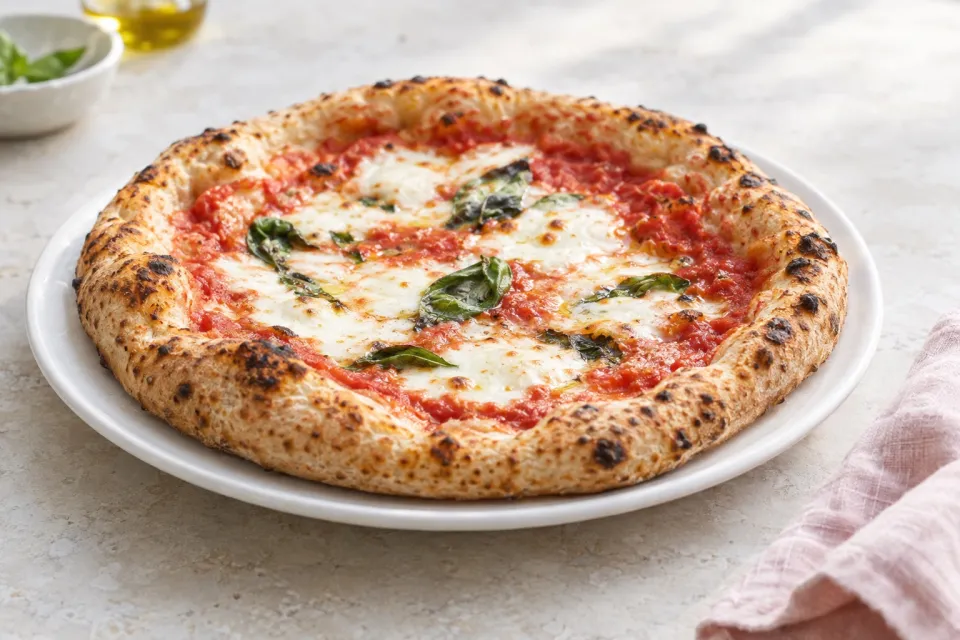
Cold-fermented pizza dough bakes into a crisp, chewy crust with big flavor from simple pantry ingredients and a little patience.
Prep 50 min · Cook 7 min · Total 11 hr 47 min · Makes 6 pizza dough balls
Ingredients
- 4 1/2 cups unbleached high-gluten, bread, or all-purpose flour, chilled
- 1 3/4 teaspoons salt
- 1 teaspoon instant yeast
- 1/4 cup olive oil, optional
- 1 3/4 cups water, ice cold
- Semolina flour OR cornmeal for dusting
Directions
- In a 4-quart bowl, or the bowl of an electric mixer, combine the flour, salt, and instant yeast. Add the oil and cold water, then mix with a large metal spoon until all the flour is hydrated; if using a mixer, use the paddle attachment on low speed. If working by hand, keep dipping one hand or the spoon into cold water and use it like a dough hook, working the dough firmly into a smooth mass while your other hand turns the bowl. Change direction a few times as you go to help build the gluten. Continue for 5 to 7 minutes, until the dough is smooth and the ingredients are evenly incorporated. If using a mixer, change to the dough hook and knead on medium speed for 5 to 7 minutes, or until you have a smooth, sticky dough. It should pull away from the bowl’s sides while still clinging to the bottom. If it is so wet that it stays on the sides, add a little more flour, just until it releases there. If it pulls free from the bottom, add a teaspoon or two of cold water. When it is ready, the dough should be springy, elastic, and sticky rather than merely tacky, and it should measure 50 to 55F.
- Flour the counter, then move the dough onto it. Line a sheet pan with baking parchment and coat the parchment with spray oil, or oil it lightly. With a metal dough scraper, divide the dough into 6 equal portions, or make them larger if you are comfortable handling bigger pizzas. To prevent sticking, you may dip the scraper in water between cuts. Dust the dough with flour. Dry your hands well, flour them, then pick up each portion and gently shape it into a ball. If the dough grabs onto your hands, flour them again. Set the dough balls on the prepared sheet pan. Coat them generously with spray oil, then slide the pan into a food-grade plastic bag.
- Refrigerate the pan overnight so the dough can rest, or leave it there for up to 3 days. If you want to hold some dough for later baking, place the dough balls in zippered freezer bags. First, dip each dough ball into a bowl with a few tablespoons of oil, turning it to coat, then put each ball in its own bag. The bags can go into the freezer for up to 3 months. Move them to the refrigerator the day before you want to make pizza.
- On pizza day, take out the number of dough balls you want from the refrigerator 2 hours before you plan to bake. Before that 2-hour room-temperature rest begins, flour the counter and mist it with spray oil. Set the dough balls on the prepared counter, dust them with flour, and flour your hands as well. Press each ball gently into a flat disk about 1/2 inch thick and 5 inches across. Dust the dough with flour, mist it again with spray oil, and cover it loosely with plastic wrap or a food-grade plastic bag. Leave it to rest for 2 hours.
- At least 45 minutes before baking, put a baking stone on the oven floor if you have a gas oven, or place it on a rack in the lower third of the oven. Preheat the oven as high as it will go, up to 800F. Most home ovens reach only 500 to 550F, though some can get hotter. If you do not have a stone, use the underside of a sheet pan instead, but do not preheat that pan.
- Coat a peel, or the back of a sheet pan, generously with semolina flour or cornmeal. Shape and bake the pizzas one at a time. Flour your hands well, including the backs and knuckles, then lift 1 piece of dough from underneath with a pastry scraper. Drape it gently over your fists and stretch it by bouncing it in a circular motion across your hands, easing it a little wider with each bounce. If it starts sticking, put it back on the floured counter, flour your hands again, and keep going. If tossing feels tricky, or the dough keeps tightening back up, let it sit for 5 to 20 minutes so the gluten can relax, then try again. A rolling pin is an option too, though it will not give quite the same result.
- Once the dough is stretched the way you want it, about 9 to 12 inches across for a 6-ounce piece of dough, place it on the peel or pan. Check that there is enough semolina flour or cornmeal underneath for the dough to slide. Add a light layer of sauce, followed by your other toppings, keeping in mind that restraint makes a better pizza. Loading it up American “kitchen sink” style works against you because it makes the crust harder to bake well. A small handful of toppings, usually no more than 3 or 4 including sauce and cheese, is plenty.
- Slide the topped pizza onto the stone, or bake it right on the sheet pan, and shut the oven door. After 2 minutes, check on it. If it needs more even color, rotate it 180 degrees. The pizza should bake in about 5 to 8 minutes. If the top finishes before the bottom, move the stone to a lower shelf before baking the next pizza. If the bottom gets crisp before the cheese caramelizes, raise the stone for the following bakes.
- Take the pizza out of the oven and move it to a cutting board. Let it stand for 3 to 5 minutes before cutting and serving, so the cheese can settle slightly.