Pressure Cooker Beef Stock
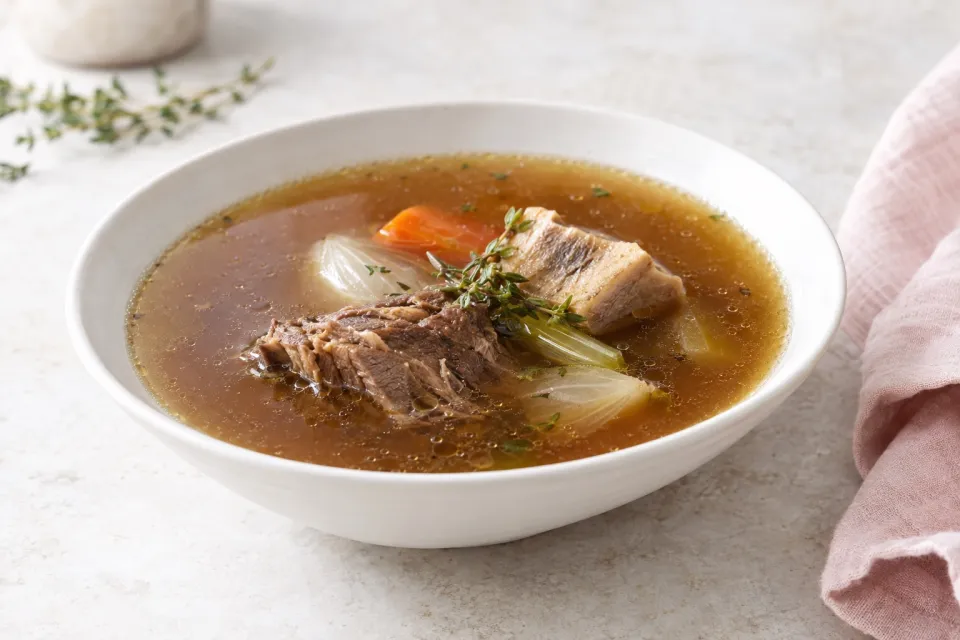
Roasted beef bones and aromatics become a full-bodied pressure cooker stock, ready for soups, sauces, braises and risotto.
Prep 40 min · Cook 3 hr 45 min · Total 4 hr 55 min · Makes about 3 quarts
Ingredients
- 5 pounds beef bones
- Vegetable oil, for drizzling
- 1 yellow onion, roughly diced
- 1 medium carrot, roughly diced
- 1 large celery rib, roughly diced
- Boiling water, for deglazing
- 2 medium cloves garlic
- 2 sprigs thyme
- 1 sprig flat-leaf parsley
- 2 tablespoons tomato paste
Directions
- Heat the oven to 400 degrees F, with a rack in the center. Rub the bones with a light coating of oil, then spread them out in a single layer on a rimmed baking sheet or in a roasting pan. Roast until they start taking on a golden-brown color, turning them once or twice as they cook, about 30 minutes.
- While the bones are roasting, toss the onion, carrot, and celery lightly with oil. Once the bones have finished their first roast, scatter the vegetables over and around them. Return the pan to the oven and keep roasting until both the bones and vegetables are well browned, about 30 minutes longer. Watch closely so nothing burns.
- Move the roasted beef bones and vegetables into a pressure cooker. Drain away and discard any fat collected in the roasting pan, or save it if you like. Add a shallow splash of boiling water to the pan and scrape up the browned bits stuck to the bottom, then pour those juices into the pressure cooker.
- Add the garlic, thyme, parsley, and tomato paste to the pressure cooker. Pour in enough cold water to reach the cooker's max-fill line. Do not go above the max-fill line, even if a few pieces are poking out of the liquid.
- Seal the pressure cooker, bring it up to high pressure, and cook for 2 hours 30 minutes. Let the pressure come down on its own. Open the cooker, then pass the stock through a fine-mesh strainer, discarding the solids, though if there is a shank in the mix, that part is worth eating.
- Remove the fat from the stock by skimming it carefully from the surface while the stock is still hot, or make it easier by chilling the stock thoroughly and lifting off the firm layer of fat that forms on top.
- Divide the stock among storage containers or zipper-lock bags. If the stock has been chilled, warm it until it is liquid again first, then refrigerate or freeze it until you need it.