Fresh Pasta
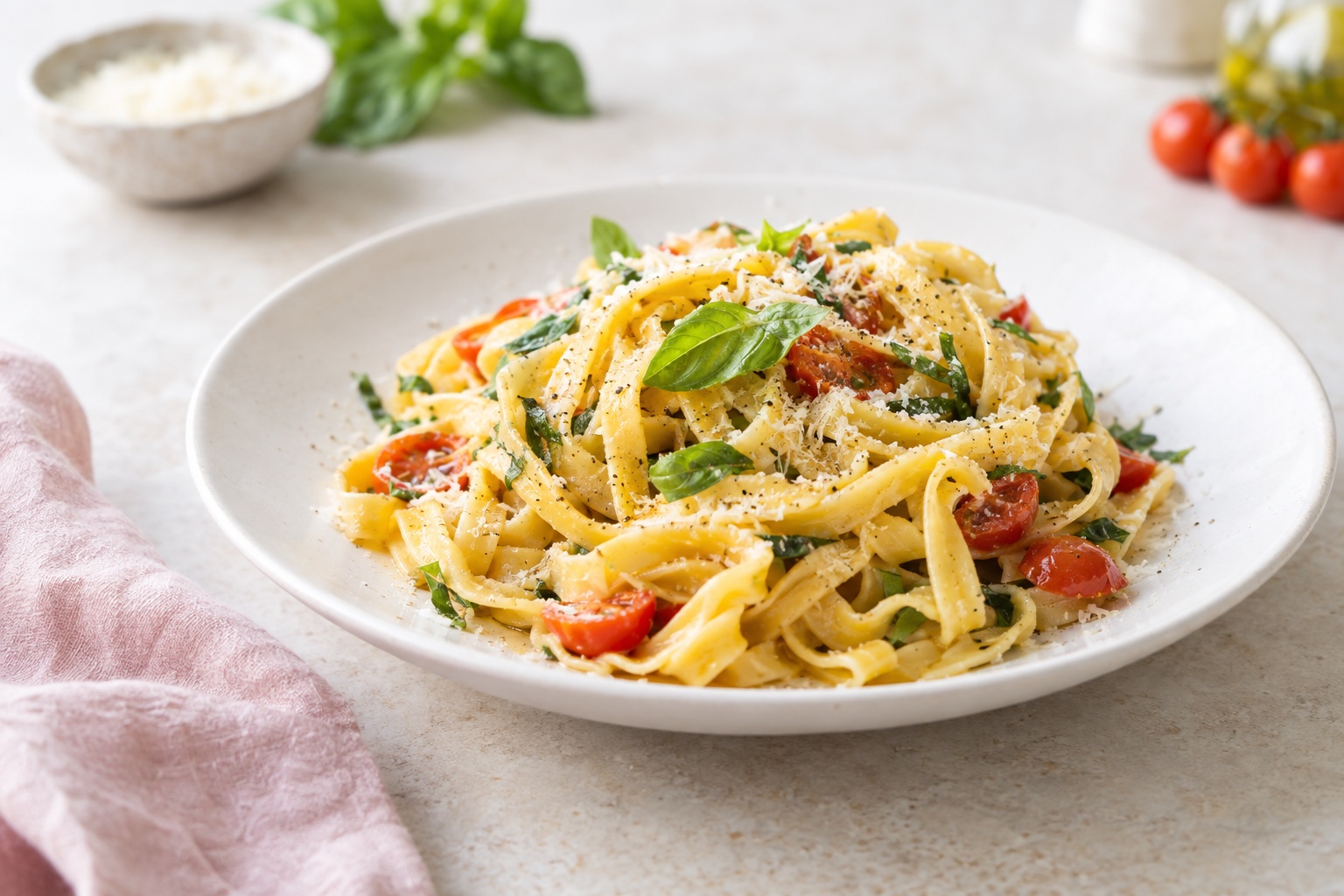
Flour, eggs, yolks, and salt become supple fresh pasta you can roll, cut, and sauce any way you like.
Ingredients
- 10 ounces all-purpose flour, plus more for dusting
- 2 whole large eggs
- 4 yolks from 4 large eggs
- 1 teaspoon kosher salt, plus more for salting water
Directions
- Start the dough on a roomy, clean counter: pile the flour into a mound, then open a well in the middle, about 4 inches wide. Add the eggs, yolks, and salt to that well and beat them thoroughly with a fork. Once they are blended, pull flour in little by little, until the center turns into a wet, sticky dough.
- Take a bench knife and scrape the clingy dough from the fork and your fingers. Use the bench knife to fold more flour into the dough, turning the dough about 45 degrees after every fold, until it feels firm and dry and can be gathered into a rough, craggy ball, 2 to 5 minutes.
- Lean the heel of your hand into the dough, pressing it forward and downward. Turn the ball 45 degrees and do it again. Keep going until the dough is smooth and elastic, like a firm ball of modeling clay. If it is too damp, work in flour in 1 teaspoon increments. If it is too dry, mist in water slowly with a spray bottle.
- Cover the dough ball snugly with plastic wrap and let it sit on the countertop for 30 minutes.
- While it rests, lay parchment on a tray or cutting board and give it a light dusting of flour. Unwrap the rested dough and divide it into quarters. Put 1 quarter on your work surface and wrap the rest again. Use a rolling pin to press that piece into an oblong shape about 1/2 inch thick.
- Click the pasta maker to its widest setting, then run the dough through 3 times without changing the setting.
- Move the dough back to a surface with a little flour on it. Fold the ends toward the middle until they meet, then fold the dough in half at that meeting point, doing your best not to trap air inside. Use the rolling pin to press it back to 1/2-inch thickness. Send it through the rollers 3 more times.
- Move the rollers 1 notch thinner and repeat that folding, flattening, and 3-pass routine. Do the same thing 1 more time; by then, the dough has been through the 3rd widest setting. Keep feeding the dough through the rollers, dropping the thickness by 1 setting for each pass, until it is as thin as you want it. At this point it should feel delicate, stretchy, and a bit translucent when you handle it.
- Lay the rolled sheet on a floured work surface or on a baking sheet that is either lightly floured or lined with parchment paper. If it needs to fold to fit, let it, but add flour or parchment between the layers so nothing sticks.
- Cover the dough with plastic wrap or a kitchen towel so it does not dry out, then roll the remaining dough quarters the same way: flatten each piece, pass it through the machine, fold and reroll it, thin it setting by setting, and lay it out with flour or parchment. For noodles, cut the dough into 12- to 14-inch lengths.
- Switch the pasta machine to whichever noodle cutter you want. Feed 1 dough segment at a time through the cutter. Or, fold the dough and slice it by hand with a chef’s knife to make noodles as wide as you like.
- Separate the cut noodles into individual portions, give them a light flouring, and coil each portion into a nest. Set the nests on a rimmed baking sheet lined with parchment and drape a kitchen towel over them gently until you are ready to cook. To freeze, put the baking sheet straight into the freezer, then move the frozen pasta to a zipper-lock freezer bag and keep it frozen for up to 3 weeks before cooking. Cook frozen pasta straight from the freezer.
- Set a big pot of salted water over high heat and bring it to a full boil. Add the pasta, stir gently with a wooden spoon, chopsticks, or a cooking fork, and cook, tasting regularly, until the noodles are set but still have a clear bite, about 1 1/2 to 2 minutes. Drain, toss with sauce, and serve.