Classic Focaccia Bread
A slow-risen sheet-pan focaccia with olive oil, flaky salt, and deep dimples, made for tearing, dipping, and sneaking from the rack.
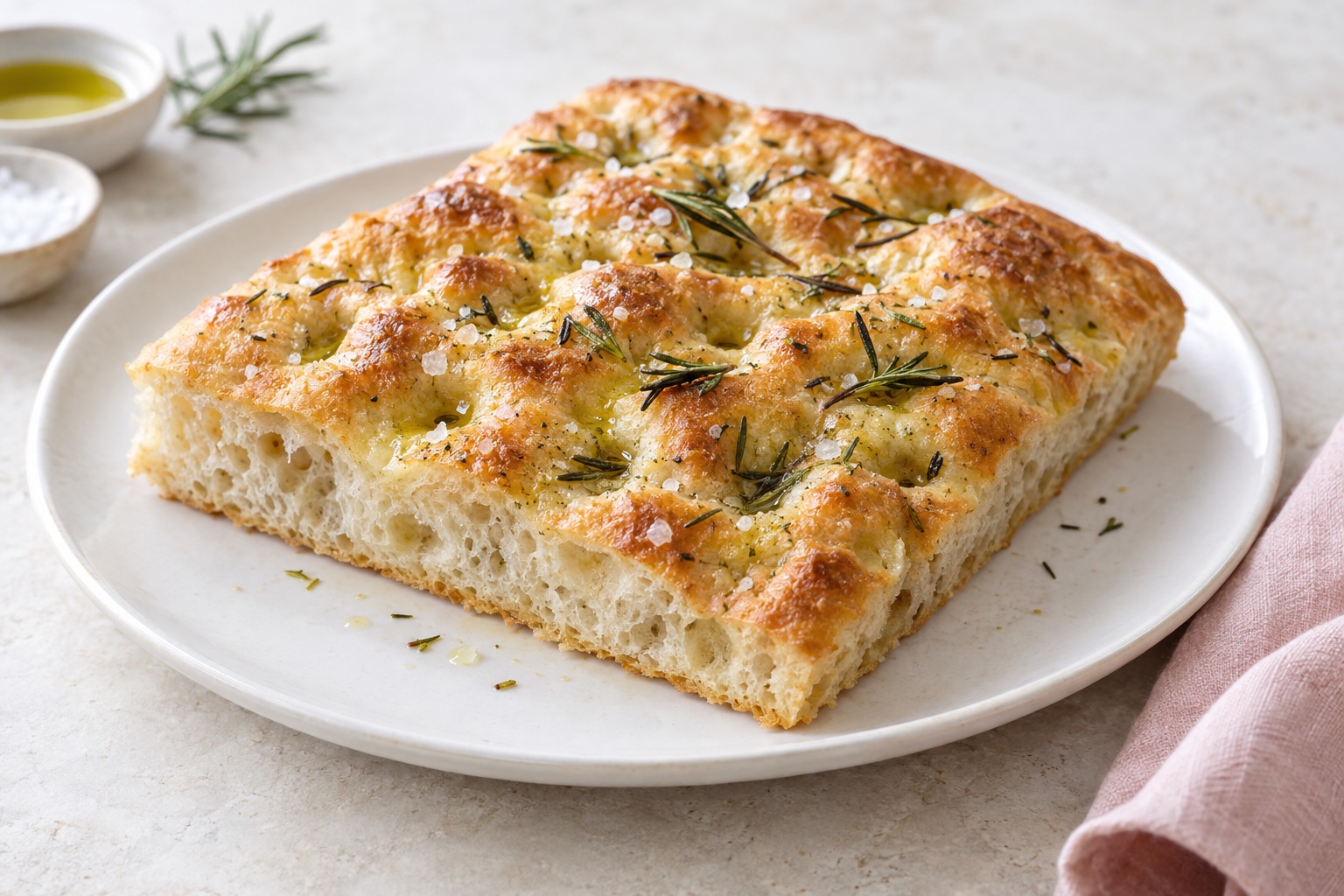
Ingredients
- 6¼ cups bread flour
- 2¼ tsp. active dry yeast
- Pinch of sugar
- 2 Tbsp. Diamond Crystal or 1 Tbsp. Morton kosher salt
- 5 Tbsp. extra-virgin olive oil, divided, plus more for greasing and drizzling
- Flaky sea salt
Directions
- Add the flour and 2½ cups room-temperature water to the bowl of a stand mixer with the dough hook attached. Run the mixer on low, stopping to scrape the bowl and hook when you need to, until no loose dry flour remains and the dough looks rough and shaggy. Take off the dough hook, cover the bowl with plastic, and let the dough rest while you get the yeast ready; it can stay like this for up to 2 hours.
- In a small bowl, use a fork to stir together the yeast, sugar, and ½ cup warm water until dissolved. Let it stand until the top turns foamy, about 5 minutes.
- Add the yeast mixture to the mixer bowl and work it in on low speed until the dough has taken in the added liquid, about 1 minute. At the very start, tap the mixer on and off a couple of times so the water stays in the bowl where it belongs. Add the kosher salt, then keep mixing and raise the speed to medium until the dough is very stretchy and extremely sticky, about 5 minutes; it will cling to the bowl and look closer to a thick batter than a neat ball of dough.
- Pour 3 Tbsp. oil into a large bowl, preferably glass, and turn the bowl so the oil coats the sides. Use a large spatula or flexible bench scraper to move the dough into the oiled bowl. Cover it, set it somewhere warm, and let it rise until it has doubled, 2-3 hours. With a glass bowl, you can mark the starting height with a dry-erase marker or a piece of tape so it is easy to see when the dough has risen enough.
- Drizzle 2 Tbsp. oil onto a 18x13" sheet pan, then spread it over the bottom and up the sides with your fingertips. With a large spatula or flexible bench scraper, fold the dough over itself in the bowl a couple of times to knock it back, then scrape it onto the prepared pan. Oil your hands, lift the dough, and fold it in half over itself; turn the pan 90 degrees and fold it in half again. Cover with a piece of thoroughly oiled plastic and leave it alone for 10 minutes so the gluten can loosen up.
- Take off the plastic and, with oiled hands, gently stretch the dough across the pan lengthwise and crosswise, easing it into an even layer all the way to the edges and corners without tearing it. If the dough snaps back, give it 5-10 minutes to rest, then try again. Cover it again with the same oiled plastic and refrigerate for at least 8 hours and up to 24.
- Set the sheet pan in a warm place until the dough is puffy, bubbly, and almost doubled in height, 45-65 minutes. If you are using a standard half sheet pan, the dough should come up to the top of the sides. While that happens, place a rack in the center of the oven and heat the oven to 450 degrees.
- Peel off the plastic and drizzle the dough generously with more oil. Oil your hands again, then press your fingertips firmly into the dough, going all the way down to the bottom of the pan to make dimples over the whole surface. Finish with a generous sprinkle of sea salt.
- Bake the focaccia until the entire top is a deep golden brown, 25-35 minutes. Let it cool in the pan for 10 minutes. Run a thin metal spatula under the focaccia to free it from the sheet pan; it may catch in a couple of spots, so be firm about getting underneath it. Move it to a wire rack and let it cool completely before cutting it however you like.
- To make it ahead, bake the focaccia 1 day ahead. Wrap it tightly in plastic and keep it at room temperature.