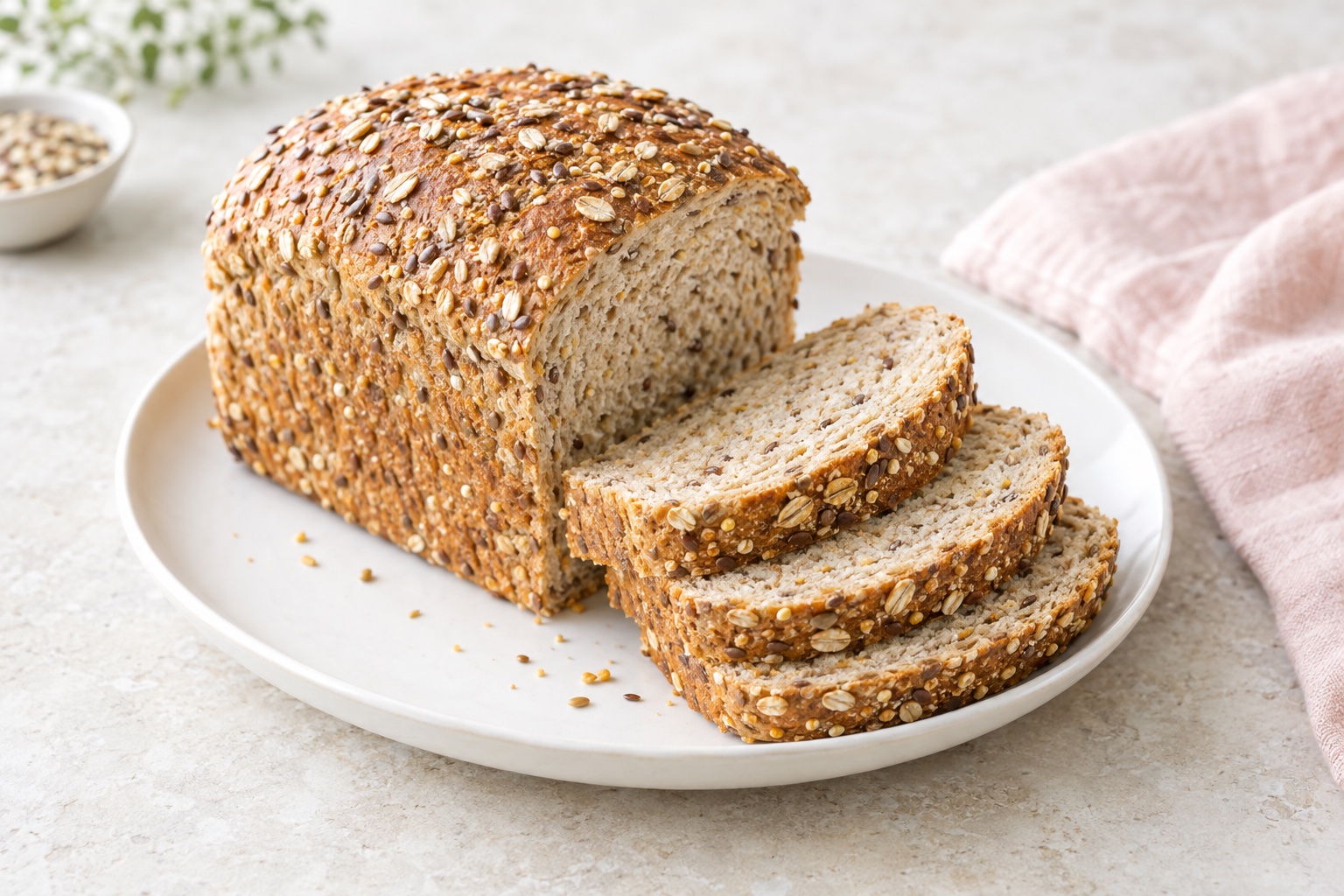
Multigrain Sandwich Bread
A hearty whole wheat loaf packed with flax, chia, oats and wheat germ, baked into tender sandwich slices with deep grain flavor.
Ingredients
- For the Grains:
- 1 1/2 ounces flax seed or meal
- 1 ounce chia seeds
- 1 ounce rolled oats
- 1/2 ounce wheat germ
- 2 ounces cool water, about 65°F/18°C
- For the Dough:
- 15 ounces traditional whole wheat flour, such as Bob's Red Mill , plus more for dusting
- 11 1/4 ounces cool water, about 65°F/18°C
- 1 3/4 ounces dark or light brown sugar
- 3/8 ounce Diamond Crystal kosher salt; for table salt, use about half as much by volume or the same weight
- 1/4 ounces instant dry yeast, such as SAF ; not RapidRise or active dry
- 1 ounce neutral oil, such as safflower, or a nutty, flavorful oil, such as hazelnut or roasted pumpkin seed
Directions
- For the grains: In a medium bowl, stir together the flax with the chia, oats, and wheat germ. Pour in the water, mix until the grains have taken it in, and cover the bowl snugly.
- For the autolyse: In a large bowl, mix the whole wheat flour and the first addition of water. When the water has disappeared into the flour, give the dough a short knead against the bowl until you do not see any dry patches. Cover the bowl and leave it for 2 1/2 hours.
- For the dough: Move the hydrated dough to a 14-cup food processor fitted with the standard metal blade, not the dough blade. Add the brown sugar, salt, and instant dry yeast, then process until the dough turns smooth and silky and you can pull a small bit into a sheer film without it ripping, about 75 seconds. The timing depends on the strength and size of your machine. If your processor is smaller, its lower capacity and motor power mean you’ll need to split the dough in half and process it in batches.
- After the gluten is developed, with the processor running, stream in the remaining water and oil and let it mix until they are just roughly worked in. Stop the processor, add the prepared grain mixture, and process again only until the dough is uniform. It should be sticky, wet, stretchy, and a bit bumpy from the seeds.
- For the first rise: Scrape the dough into a large, lightly greased bowl; reusing the autolyse bowl is perfectly fine, and you can skip washing it. Cover and let it proof until it feels airy and looks puffy, with the volume roughly doubled, about 2 hours at 70 degrees F (21 degrees C). A cool room will slow things down, while a warm room will speed them up, so use the feel of the dough more than the clock.
- For shaping the loaf: Turn the soft dough onto a clean work surface that has been lightly dusted with whole wheat flour. Pat it into a 7-inch square, then roll it into a snug log, pressing the seam closed with the heel of your hand. Place it seam side down in a lightly greased 1-pound loaf pan, and cover it loosely as you did earlier.
- For the second rise: Leave the dough to proof until it is airy and puffy and the center has climbed about 2 1/2 inches over the pan rim. Check it by touching the dough gently with a flour-dusted fingertip; it is ready when the indentation stays shallow and slowly returns after a minute. If it feels tight and rebounds immediately, let it keep rising until that shallow mark remains. This should take about 75 minutes at around 70 degrees F (21 degrees C), though your kitchen will influence the pace, so rely on touch. Toward the end, set an oven rack in the lower-middle position and heat the oven to 350 degrees F (177 degrees C).
- For baking the loaf: When the second rise is done, remove the cover and bake until the loaf has risen nicely, turned golden brown, and sounds hollow when you tap it, about 45 minutes, or until its internal temperature is approximately 200 degrees F (93 degrees C). Turn it out onto a wire rack right away, then let it cool all the way before you cut it, at least 90 minutes. Use a sharp serrated knife for slicing. Store the loaf at room temperature in a bread box or paper bag for up to a week.