Creamy Coconut Frosting
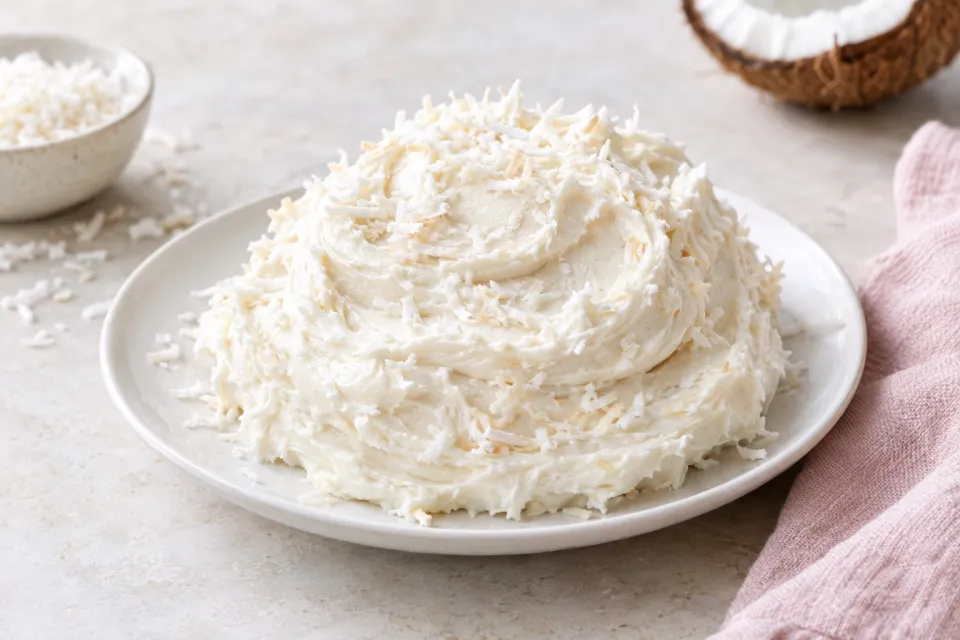
A fluffy coconut buttercream made with vanilla bean, butter and virgin coconut oil for a creamy frosting with real coconut flavor.
Prep 30 min · Cook 15 min · Total 45 min · Makes about 8 cups
Ingredients
- 6 ounces egg whites, from 5 to 6 large eggs
- 12 ounces turbinado sugar, such as Trader Joe's
- 3/4 teaspoon Diamond Crystal kosher salt; use half as much if iodized
- 1/4 teaspoon cream of tartar
- Scraped seeds from 1 Tahitian vanilla bean, such as Beanilla
- 16 ounces unsalted butter, softened to about 65°F
- 4 ounces virgin coconut oil, such as Vita Coco, creamy and soft, about 72°F
- 1 teaspoon Tahitian vanilla extract, such as Beanilla
Directions
- Pour at least 1 1/2 inches water into a wide pot, then set a sturdy coil of crumpled tinfoil in the bottom so the mixing bowl can sit above the base of the pot. Heat the pot over high heat until the water is very hot and steaming, then lower the heat as needed so it stays at a gentle simmer. In the bowl of a stand mixer, combine the egg whites, turbinado sugar, salt, cream of tartar, and vanilla seeds. Set the bowl over the steaming water and stir constantly with a flexible spatula, scraping as you go, until the egg whites register 185 degrees F (85 degrees C). This should take only 10 to 12 minutes; if it is taking longer, raise the heat a bit. Move the bowl to a stand mixer fitted with the whisk attachment and beat on high speed for about 10 minutes, until the meringue is shiny, firm, and no longer warm, about 90 degrees F (32 degrees C).
- With the mixer still on, add the butter 1 or 2 tablespoons at a time, then add the coconut oil. The meringue will lose some of its volume at first, and it may look thin for a while, but the mixture will cool and thicken as the butter goes in. When finished, the buttercream should be thick, creamy, and soft, not pourable, about 72 degrees F (22 degrees C). Add the vanilla extract and mix on low speed until fully incorporated.
- Use the buttercream immediately, or spoon it into a large zipper-lock bag, push out the excess air, and seal it. The buttercream can be refrigerated for up to 2 weeks or frozen for up to several months. The main concern with longer freezer storage is picking up odors, not spoilage. Before using, bring it back to 72 degrees F and whip it again.
- Troubleshooting: If the buttercream is warmer than 74 degrees F (23 degrees C), it will seem loose and too soft; chill it in the fridge for 15 minutes, then whip it again so it can cool and thicken. If it is colder than 68 degrees F (20 degrees C), it will be dense and stiff, which makes it harder to spread on cakes and slower to melt on the tongue, giving it a greasy feel. To gently warm it, set the bowl briefly over a pan of steaming water only until the edges just start to melt, then whip again to soften and warm it. You can find a full troubleshooting guide and video here.