How to Make Pad Thai
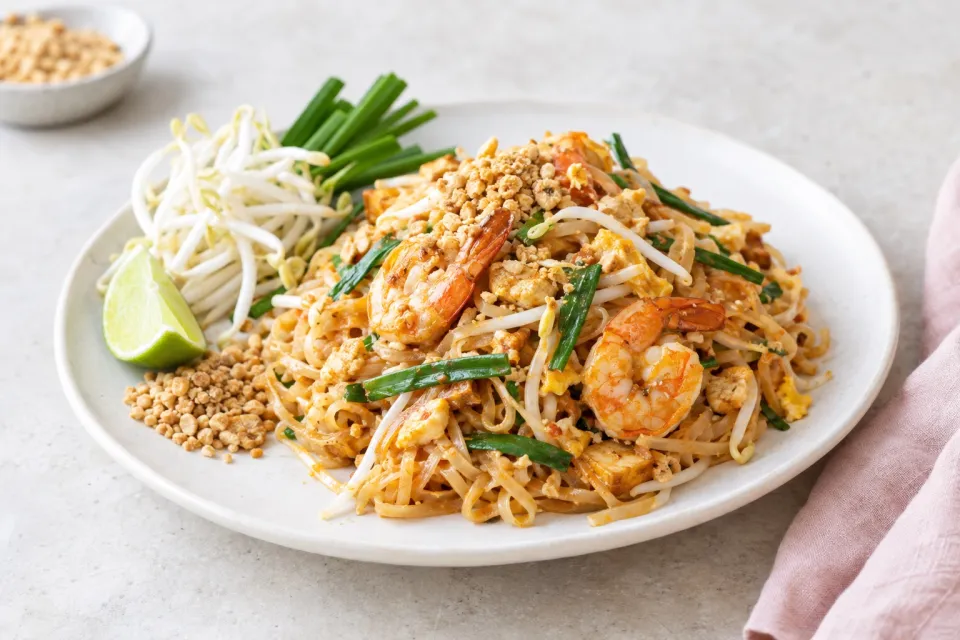
A tangy, sweet-savory shrimp pad Thai with rice noodles, eggs, peanuts, sprouts, and lime for a fresh, satisfying noodle dinner.
Prep 15 min · Cook 25 min · Total 2 hr 40 min · Makes 6 servings
Ingredients
- 1 package of flat, wide rice noodles
- 6 to 8 tablespoons fish sauce
- 3/4 cup rice vinegar
- 1 to 2 teaspoons tamarind paste
- 1 cup granulated sugar
- Pinch of paprika, or cayenne powder
- 10 to 12 tablespoons canola or vegetable oil, divided
- 4 large eggs
- 1 pound shrimp, peeled, deveined, and defrosted
- 1/3 cup roasted unsalted peanuts, chopped roughly
- 1 cup bean sprouts
- 1 lime, cut into quarters
- 2 tablespoons roasted unsalted peanuts, chopped roughly
- Chopped cilantro, for garnish
- Red pepper flakes, for garnish
Directions
- Place the rice noodles in a large container, ideally one that has a lid, and cover them completely with cold water so every strand is submerged. Leave them to soak for at least 2 hours, or as long as 12 hours. A longer soak can make them more fragile once they hit the pan. The container can go in the refrigerator, or stay out.
- In a shallow bowl, combine the fish sauce, vinegar, tamarind concentrate, and sugar, whisking until the mixture is smooth. Taste and tweak the balance as needed, then stir in a pinch of paprika or cayenne powder for color.
- Set a large pot of water over high heat and bring it to a boil.
- Separate all the ingredients into 2 batches and set them within easy reach of the stove. You’ll cook the 2 batches fully, 1 after the other.
- Working with 1 batch, set a wok or another large, high-sided pan over high heat, and keep it there for the whole pad Thai process. Pour in 2 to 3 tablespoons of oil. Once the oil has a slight shimmer, you’re good to go.
- Add the eggs for this batch to the pan, then use the tip of a wooden spoon to softly break and loosen the yolk. There should be enough oil that the egg seems to float a little in the pan, which helps it cook over a wider surface without scorching or turning into a scramble.
- Move the egg gently around the pan, shaking and flipping it as needed. Use the spoon to break it into pieces, but don’t scramble it. This should take about a minute.
- If the pan looks dry, add 1 to 2 more tablespoons of oil, then put in the shrimp for this batch. Toss them lightly and nudge them around with the wooden spoon until they pick up a little color, about a minute.
- Pull several handfuls of noodles from their soaking water, about half the total amount, and place them in a fine mesh sieve. Hold the sieve over the pot of hot water and dip the noodles in and out, lifting them up and down, just until they soften rather than truly cook. Shake off the extra hot water, then taste a noodle to check that it has softened while still keeping a little bite.
- Add the noodles to the hot pan with the shrimp. Leave them long and don’t cut them in the pan. Taste to confirm they have softened; they do not have to be fully cooked yet, since they’ll keep cooking in the wok. Toss gently and stir just a bit so the noodles don’t clump. When they turn glossy, add the sauce.
- If the sugar has settled, give the sauce a fast whisk, then pour about 1/4 cup into the pan. Toss and flip the noodles gently. Stir briefly to work the sauce through; once there is no visible sauce left in the pan, the noodles have taken it in.
- Add the peanuts and sprouts, then quickly toss everything together. Cook for 2 to 3 minutes, until the ingredients are hot throughout. The noodles should become softer and more translucent.
- Take the pan off the heat and taste to be sure the dish is sauced enough. Serve right away in individual bowls with lime wedges, additional peanuts, chopped cilantro, and/or chili flakes, if desired.
- Make the second batch of pad Thai by repeating the same cooking process for the remaining ingredients.