Pressure Cooker Red Wine–Braised Beef Short Ribs
Tender short ribs braised under pressure with red wine, port, vegetables and herbs make a rich, glossy beef dinner with deep flavor.
Prep 30 min · Cook 3 hr 5 min · Total 3 hr 50 min · Makes 6 servings
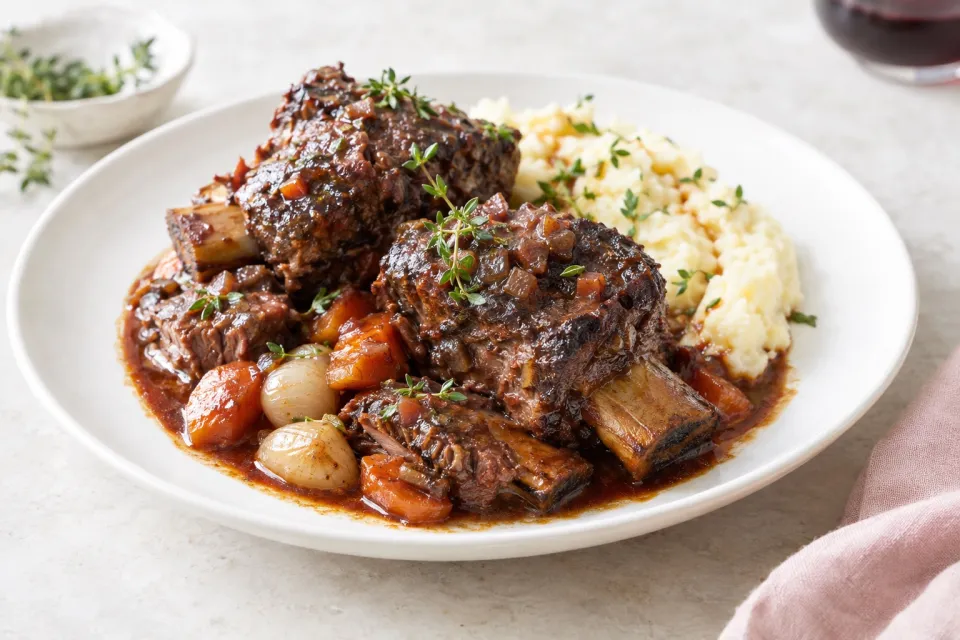
Ingredients
- 5 pounds beef short ribs
- Kosher salt and freshly ground black pepper
- 1 tablespoon vegetable or other neutral oil
- 2 celery ribs, cut into 1/2-inch dice
- 2 large carrots, cut into 1/2-inch dice
- 1 large yellow onion, cut into 1/2-inch dice
- 5 medium garlic cloves, smashed
- 2 tablespoons tomato paste
- 1 bottle dry red wine
- 2 cups good-quality brown beef stock, brown chicken stock, white chicken stock, or store-bought chicken stock
- 1 packet unflavored gelatin, such as Knox, only if using store-bought stock
- 4 sprigs fresh thyme
- 2 bay leaves
- 1 bottle ruby port wine
- Slurry made from 1/2 teaspoon cornstarch mixed with 1 teaspoon water, optional
Directions
- Pat the short ribs with salt and pepper on every side. Warm the oil in a pressure cooker over medium-high heat, or choose the sauté or sear setting on an electric multi-cooker, until the oil looks glossy and hot. In batches, place the short ribs in the pot and sear them on every side, about 6 minutes per side. Move the browned ribs to a platter, then continue with the rest.
- Leave 2 tablespoons of fat in the pressure cooker and pour away the extra. Put the pot back over the heat, then add the celery, carrot, onion, and garlic. Cook, stirring frequently, until the vegetables take on color, about 6 minutes. Mix in the tomato paste and cook for 1 minute more, reducing the heat whenever anything looks close to scorching.
- Pour in the red wine, using it to loosen the browned bits from the bottom and sides of the pot. Bring the wine to a simmer and let it cook until the sharp alcohol aroma has mostly faded, about 10 minutes. Add the stock; if you are using store-bought stock, first put it in a large bowl, scatter the gelatin over it until bloomed, and then pour it into the pressure cooker. Check that the liquid stays below the pressure cooker’s max fill line; if it is too high, hold back some of the stock.
- Place the short ribs back in the pressure cooker, including any juices from the platter, and tuck them down into the braising liquid. Add the thyme and bay leaves. Set the cooker to high pressure and cook for 45 minutes, counting from the time high pressure is reached.
- While the ribs cook, pour the port into a large saucepan and bring it to the barest simmer, adjusting the heat so it stays there. Cook it uncovered until it becomes syrupy and reduces to about 1/2 cup (120ml), about 1 hour. Remove it from the heat and reserve it.
- Release the pressure and take off the lid. A natural release is recommended because the beef fat can sometimes spatter out through the vent during a fast release, though a careful quick release is possible. Gently lift the short ribs out of the cooker and place them on a clean platter; they will be extremely tender, and the bones may slide free, so support the pieces as you move them. Cover the ribs loosely with foil.
- Spoon off the fat from the top of the braising liquid and discard it. Set a fine-mesh strainer over a large heatproof bowl and strain the liquid, pressing the solids firmly to get out as much liquid as you can. Discard the vegetables and aromatics.
- Wash out the pressure cooker, then pour the strained braising liquid back into it. Return it to the heat and bring it to a low simmer, adjusting the heat to keep it steady. Simmer uncovered until the liquid is reduced to 2 cups, about 1 hour, skimming off any foam that rises as needed. Stir in the reduced port.
- The sauce is ready when it coats the back of a spoon and holds a clear path when you run your finger through it. If it still seems slightly loose, whisk in the cornstarch slurry and bring it back to a simmer until it tightens a bit.
- Taste the sauce and season it with salt and pepper. Add the short ribs back to the pressure cooker, spooning the sauce over and around them so they glaze as they gently warm through. Serve.