Slow Cooker Chicken Stock
A slow cooker turns leftover chicken bones, aromatics and herbs into a rich golden stock for cooking, sipping or freezing.
Ingredients
- 1 chicken carcass
- 2 stalks celery, cut in half
- 1 carrot, scrubbed clean and ends trimmed, cut in half
- 1 medium onion, quartered
- 4 cloves garlic, smashed
- Large handful parsley stems, large enough that the stems bundled together are the size of a quarter
- 4 to 5 large sprigs fresh thyme
- 1 bay leaf
- 1/2 tablespoon black peppercorns
- 6 cups water
Directions
- Plug in your slow cooker and switch it to low.
- Pick off any usable meat from the chicken carcass and set it aside for another meal. Remove and discard the skin. Break the bones wherever they’ll give, then add them to the slow cooker. Ligaments, dark bits and a little remaining skin can all go in too.
- Add all the remaining ingredients, water included, to the slow cooker. The garlic and onion skins can stay on if you like; they’ll deepen the color of the finished stock.
- Cover the slow cooker and let it run on low overnight. Cook the stock for at least 12 hours and as long as 24 hours.
- When the cooking time is finished, turn off the slow cooker and take off the lid. Place a fine mesh strainer lined with cheesecloth over a bowl. Lift the solids into the strainer and let them drain; once they stop dripping, discard them. Pour the remaining stock through the strainer. If there is sediment, that’s fine. For a clearer look, strain it again through several layers of cheesecloth, or leave it as is.
- Cool the stock to room temperature, then pour it into storage containers and refrigerate overnight.
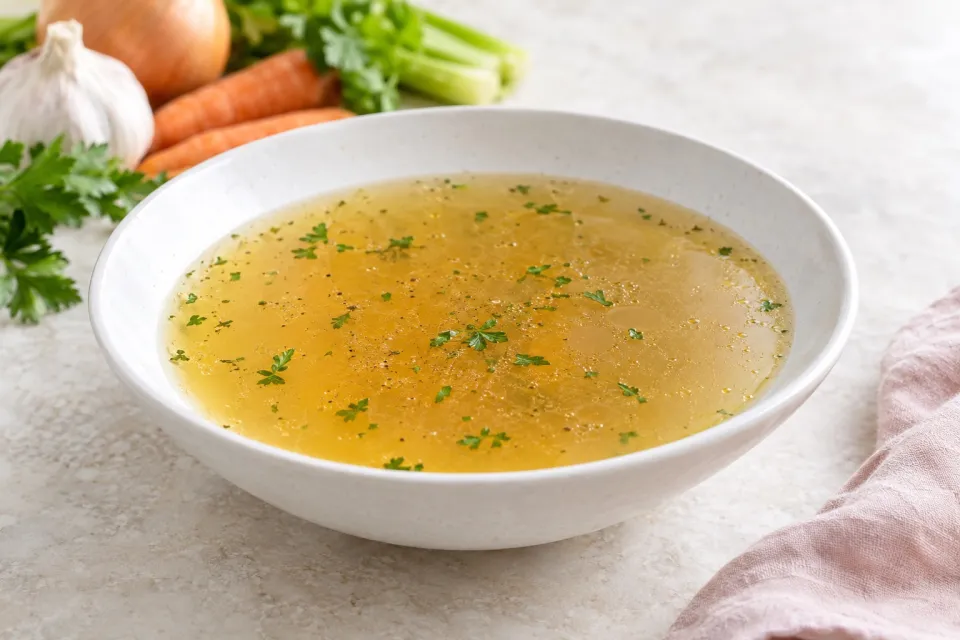
- The next day, there should be a pale layer of chicken fat on the surface. Skim it away and discard it. The stock should be golden and gelatinous, with a silky texture once warmed.
- Use the stock, or freeze it for later. It will keep in the fridge for about 5 days, or in the freezer for up to a year. When pouring, go slowly so any sediment stays at the bottom of the container.